Mandarin uses tone in a different way. In English, as well as Spanish and a great deal (a majority? I'm not sure) of the world's languages, the relative pitch of what you say carries information, but not content. Here's an example:
"What." This is a single word in the English language, albeit with several definitions. Yet you can get a different point across depending on how you say it, whether that's with a high tone, a rising tone, etc.
Here's where Mandarin is different, and I'll illustrate it with two examples.
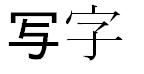
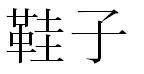
(I uploaded images of the characters in question, rather than writing them out, for readers whose computers may not have the software installed to read them)
The first two characters are pronounced "xie zi," and it means "to write." The second two characters mean "shoes," and are pronounced... "xie zi."
Here we have two words with the exact same pronunciation, that mean two different things. How in the hell?
Well, this happens a lot in Chinese, and many times you must rely on context to know the difference. This isn't anywhere near as hard as it sounds in theory, or it'd be impossible to know whether someone meant "to," "too," or "two" when they were talking, or if "yo fui" meant "It was me" or "I went."
However, in this case there IS something that differentiates these two words, and that is their relative pitch, or tone. "To write" is "xie zi," BUT... the "xie" in this word carries a tone that starts relatively low and dips even further, followed by "zi" which starts high and drops. "Shoes" is also "xie zi," BUT... "xie" is pronounced with a low, then rising tone, followed by a neutral-toned "zi" which usually takes on a tone based on the one that came before it.
Studying and mastering tone takes quite a while, and it's something I still struggle with regularly. But here we see that it's essential to properly speaking Chinese, as the pitch of your words is the difference between writing something and talking about shoes, as well as a variety of other word pairs only differentiated by tone.
